ski snow guide10/01/202616 views
Best Time to Ski in Hakuba|December–April Snow Guide for 2026-2027 season
Hakuba’s ski season usually begins in December. Depending on the year’s snow conditions and the resort, some higher-elevation slopes may stay open until early May. Hakuba47 notes that its winter season can run from December through May, and Hakuba Goryu ended its 2025–26 ski season on May 3. So, there is no single “best” time to visit Hakuba. Jan. and Feb. are the best months if you are looking for powder. March is a good choice if you want fewer crowds, lower travel costs, and a more relaxed ski rhythm. In this Paw Pow Notes, we compare Hakuba’s snow conditions, weather, crowds, and accommodation trends from December to April, so you can choose the season that best fits your trip.
Hakuba Snow Conditions Are Becoming Harder to Predict
Before planning a ski trip to Hakuba, it is important to remember one thing:
The month is a useful guide, but it is not a guarantee.
In recent years, Japan’s snow season has become harder to predict by month alone. The start of the season, snowfall timing, and snow quality can vary widely from year to year.
In Japan, many people see the first snowcap on Mount Fuji as a sign that winter is approaching. When the news reports snow on the summit of Mount Fuji, it naturally feels like the snow season is getting closer.
The Kofu Local Meteorological Office also records the first snowcap on Mount Fuji as a seasonal observation. In recent years, the dates have varied: October 23 in 2025, and November 7 in 2024.
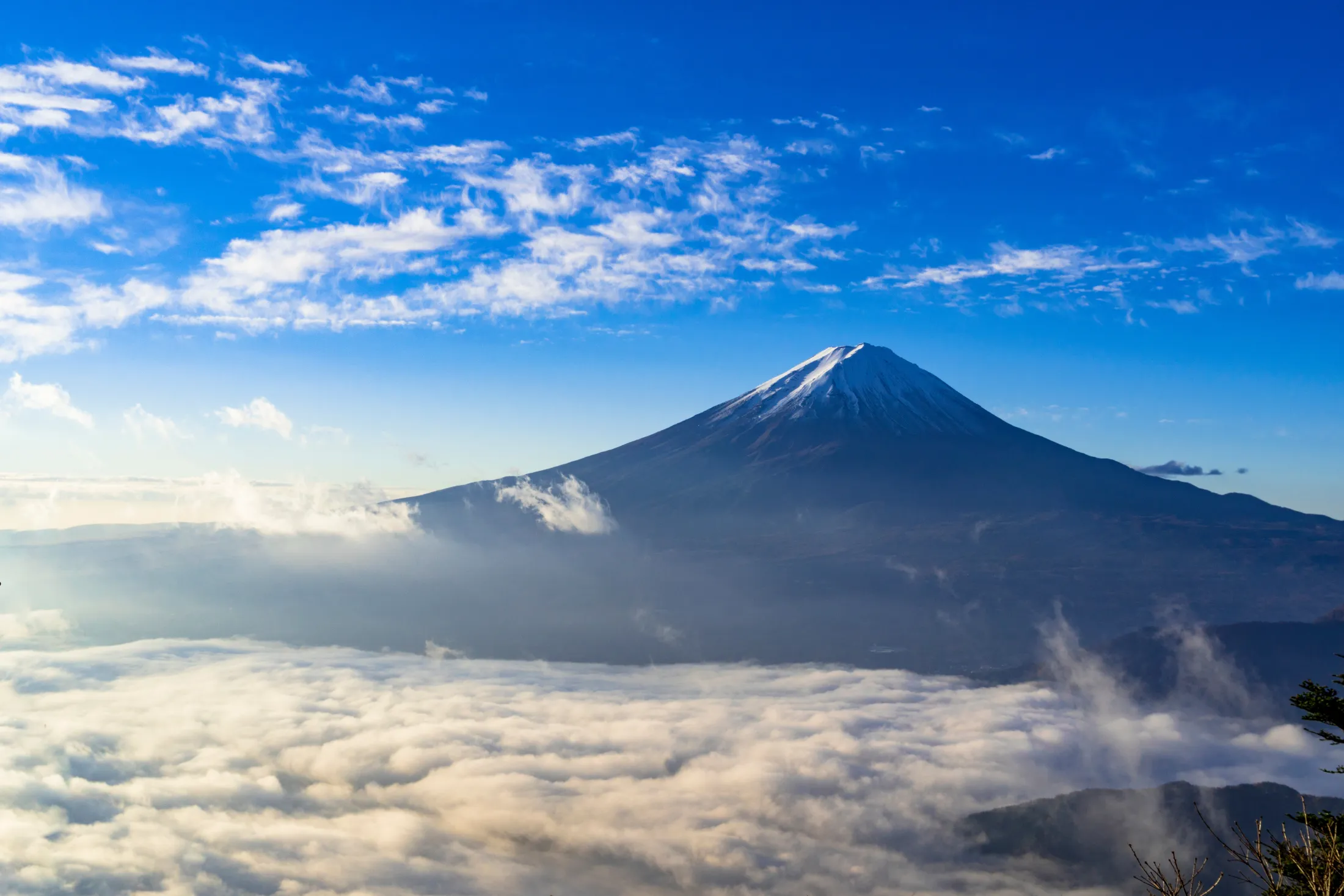
However, the first snowcap on Mount Fuji does not mean that Hakuba ski resorts already have stable snow. Actual ski conditions in Hakuba still depend on snowfall, temperature, elevation, grooming, and each resort’s operational status.
If your travel dates are flexible, it can be worth waiting until snow conditions become clearer before finalizing your trip. If you can only travel during the January–February peak season, it is better to book accommodation and restaurants early, while continuing to check resort updates and weather forecasts before departure.
Hakuba’s snow is part of nature. Every year is different, and leaving a little flexibility in your plan will make your ski trip much easier.
Hakuba Snowfall Over the Past Five Seasons
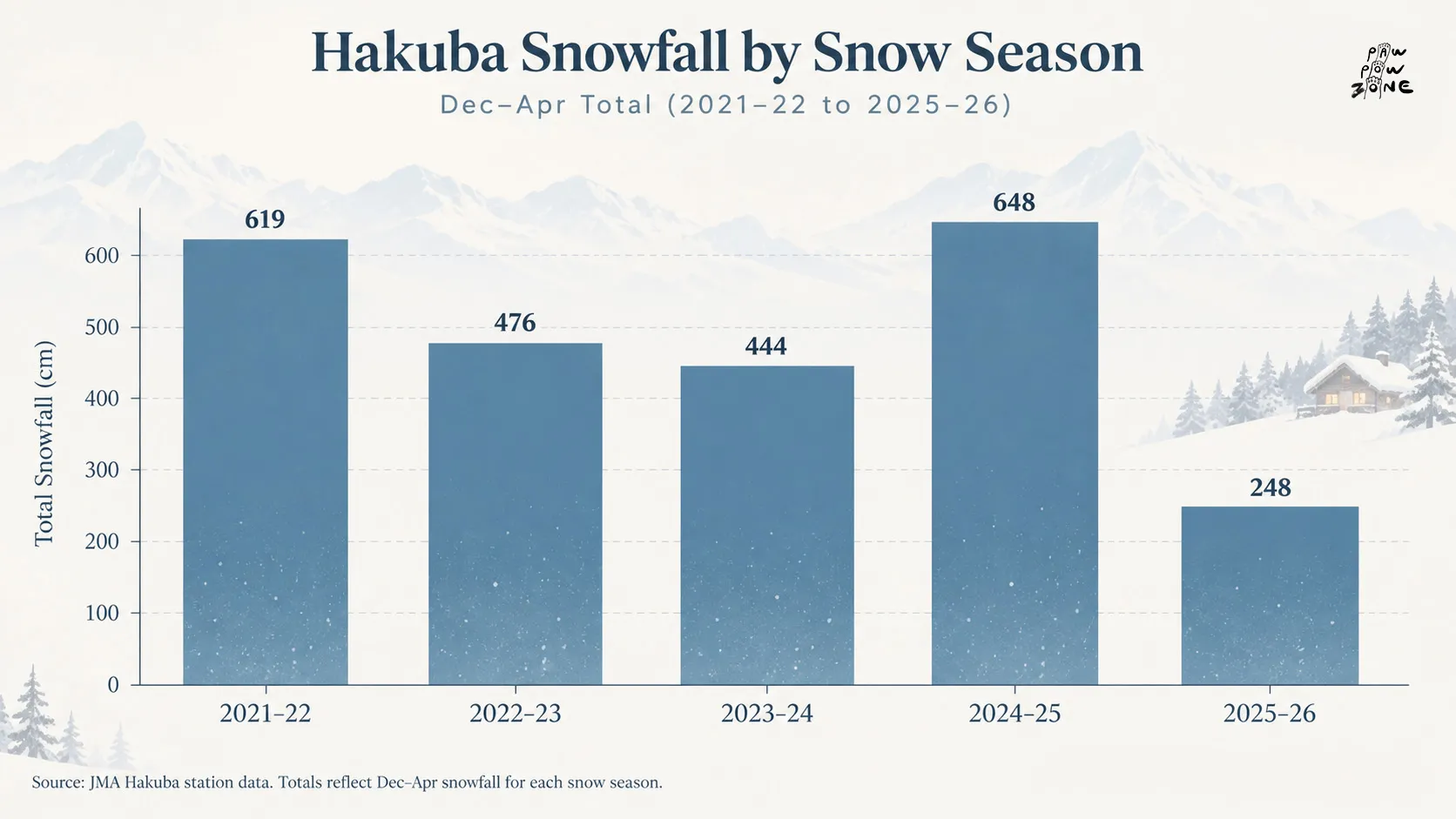
The following data is based on Japan Meteorological Agency records from the Hakuba observation point, using December to the following April as one ski season.
Please note that this is data from an observation point within Hakuba Village. It does not represent total snowfall across all Hakuba ski resorts, mountain peaks, or higher-elevation slopes. Actual ski conditions can vary depending on resort location, elevation, slope direction, grooming, and daily weather.
Looking at cumulative snowfall over the past five seasons, Hakuba’s snowfall varies greatly from year to year. The 2024–25 season had relatively high snowfall, while the 2025–26 season was clearly lower. Even in Hakuba, no two winters are exactly the same.
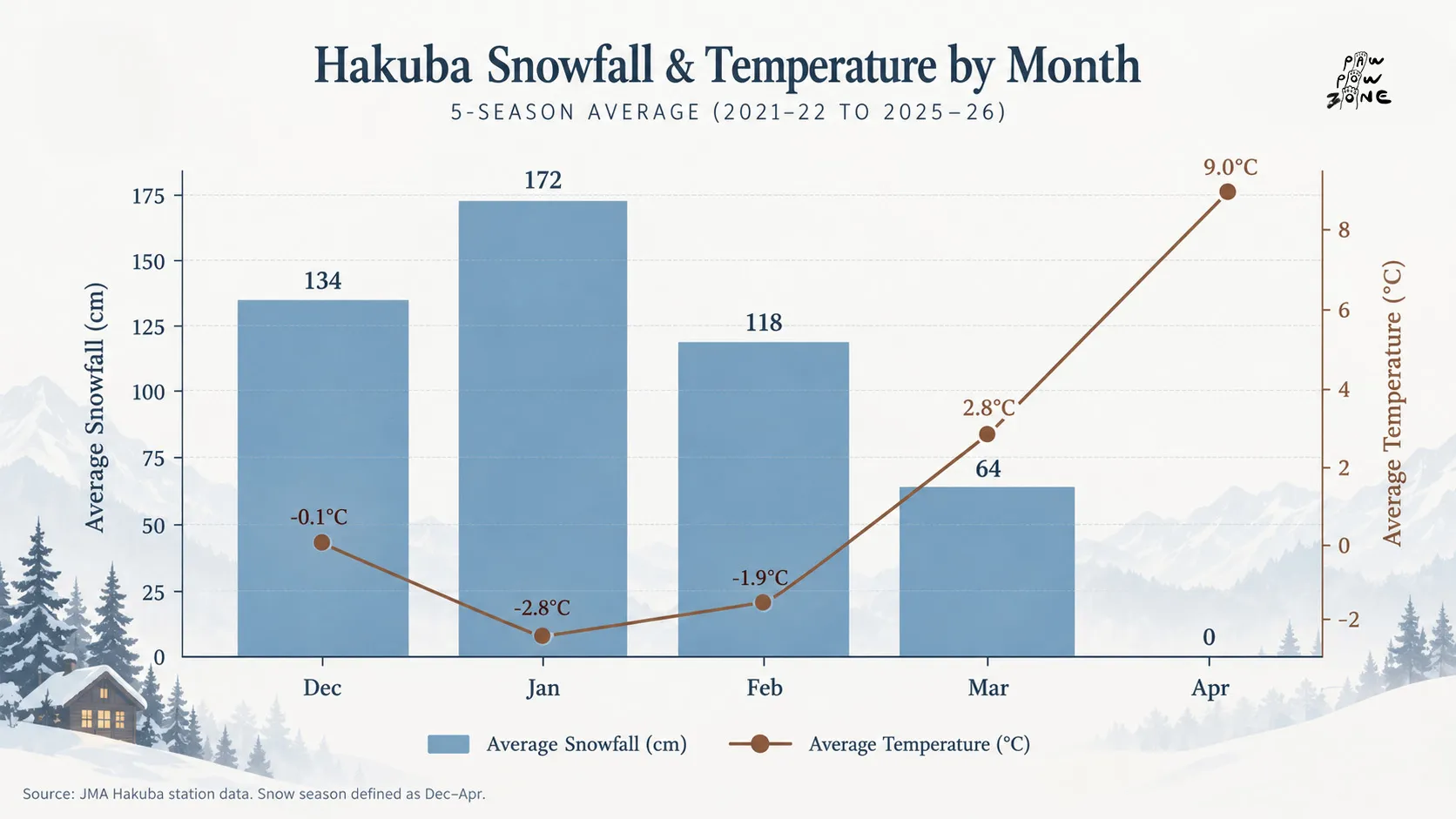
Based on monthly averages, January usually has the highest snowfall and the lowest temperature, making it the closest month to what many people imagine as “Japow.” December to February are also important snowfall months, but December depends more on how the season starts, while February is usually more stable.
By March, temperatures begin to rise and snowfall gradually decreases. The snow shifts toward spring conditions. At the Hakuba observation point, April has almost no recorded new snowfall in recent years. This does not mean skiing is impossible in April, but it depends much more on the season’s accumulated snowpack, higher-elevation conditions, and each resort’s schedule.
When Does the Hakuba Ski Season Usually Start?
Hakuba’s ski season usually begins around mid to late December. January and February are the core winter months, March gradually shifts toward spring snow, and April is the late-season spring skiing period.
Still, Hakuba’s snow conditions cannot be judged by the calendar alone.
Some years have good snowfall in December. Other years do not become stable until January. March is usually warmer, but it can still bring significant snowfall depending on the year. In April, it is especially important to check which resorts and runs are still open.
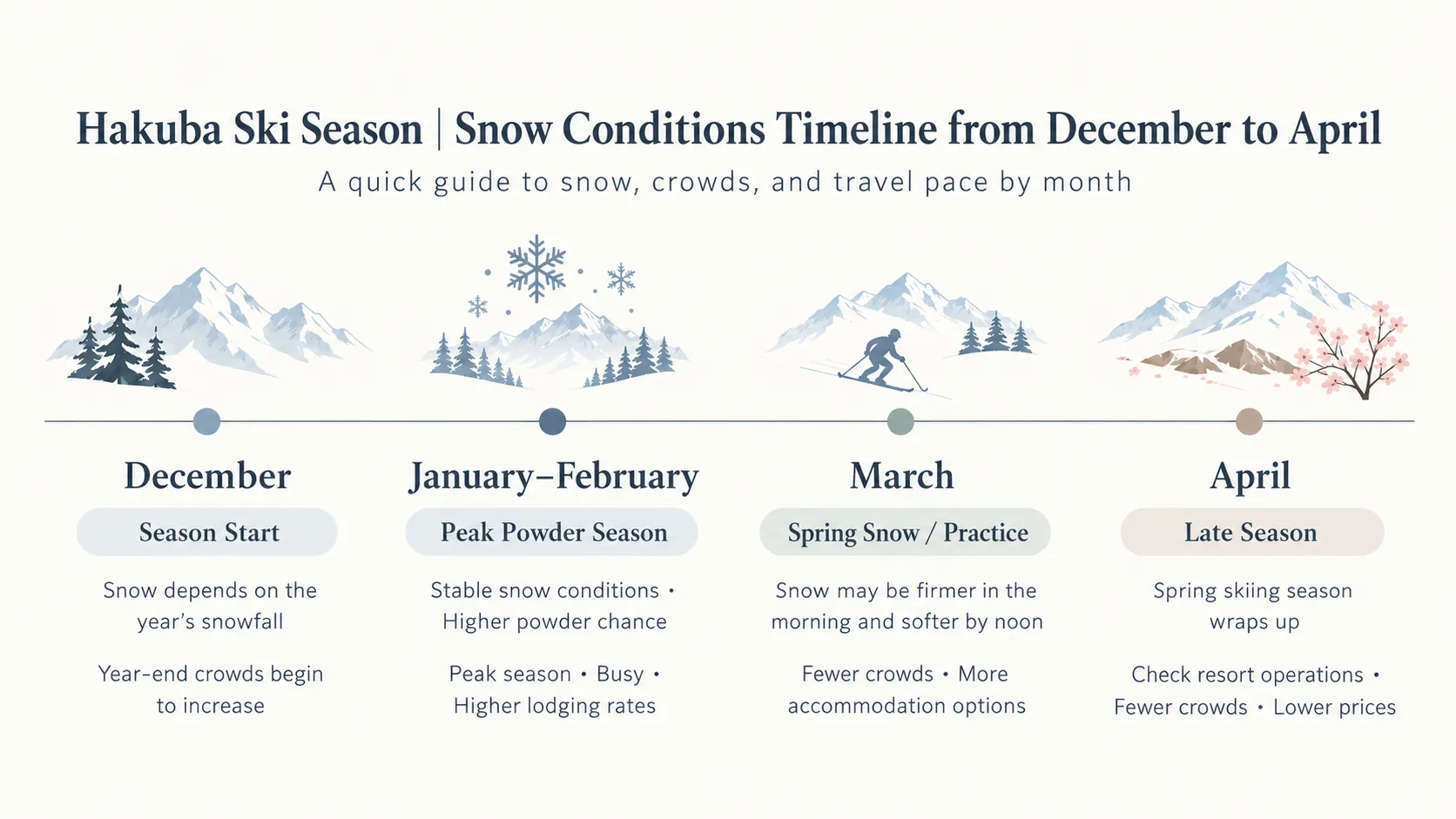
If you want powder and stable snow, January and February are the safest months to aim for.
If you want fewer crowds, lower costs, and more time to practice, March is a very good option.
If you choose April, plan it as a spring skiing trip and check resort operations before you go.
December|Early Season: Snow Depends on the Year
December marks the beginning of Hakuba’s ski season, but it is also the month most affected by that year’s snowfall.
In early December, resorts are often still waiting for stable snow. From mid to late December, more resorts begin to open depending on actual snowfall. Whether you can ski full courses still depends on temperature, snow depth, and grooming conditions.
December has a special early-season atmosphere, with Christmas and year-end travel energy.
However, if your main goal is deep powder or riding the whole mountain, December is not the safest choice.
Accommodation prices begin to rise around the year-end holidays, and popular stays may be booked early. If you can accept some uncertainty in snow conditions, and your trip is not only about skiing, mid to late December can still be worth considering.
January–February|Peak Powder Season
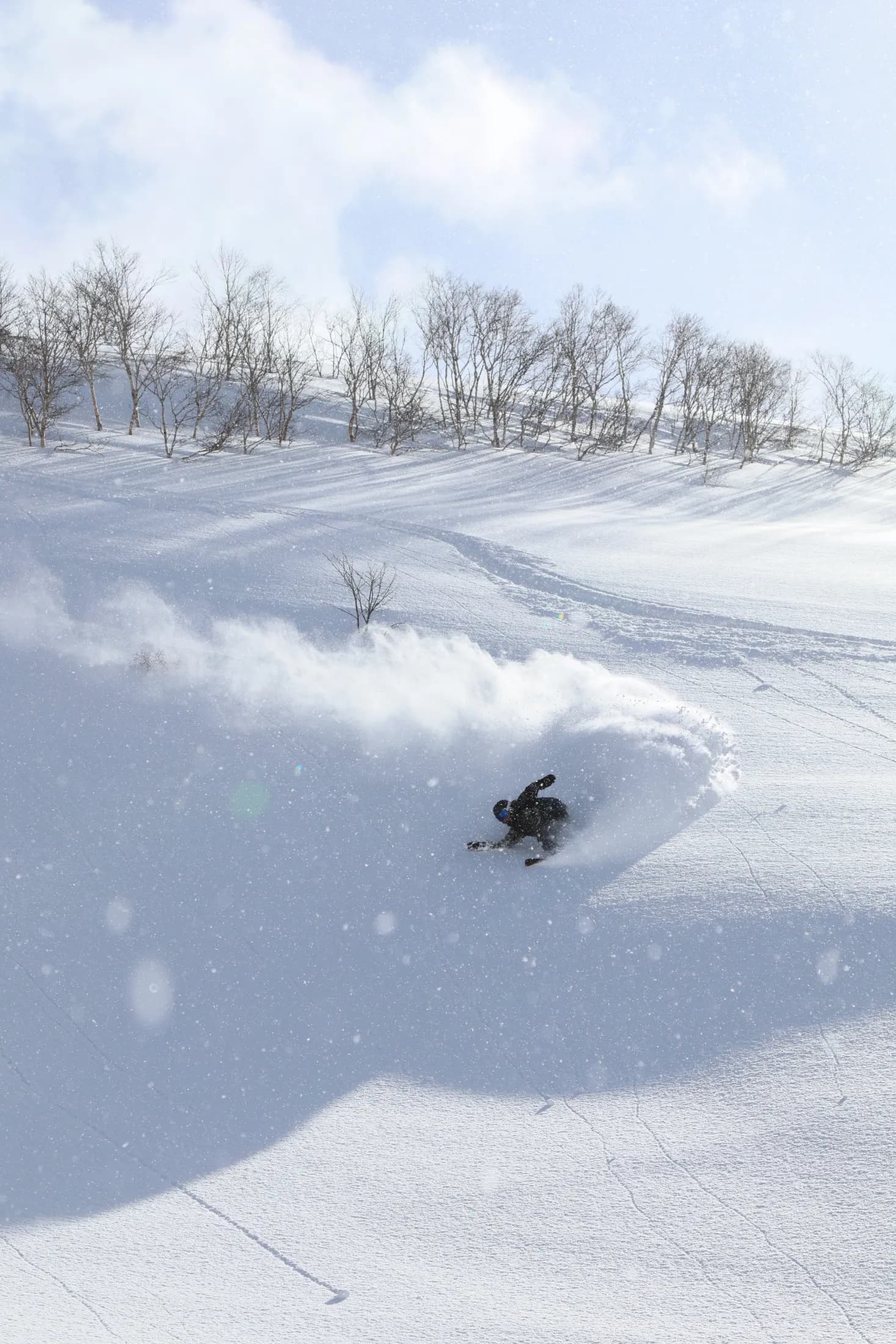
January to February is the period that most closely matches the image many people have of Japanese powder snow.
Temperatures are low, snowfall is frequent, and the snow is usually drier. Snowpack is also more stable. If you want to experience Hakuba powder, this is the most promising time of the season.
At the same time, better snow also means more people.
Accommodation prices are usually at their highest, and popular dates are booked early. Restaurants are also harder to reserve, especially in areas such as Happo, Echoland, and Wadano. Finding dinner at the last minute can be more difficult than expected.
January and February are also genuinely cold. During heavy snowfall, visibility can be poor, and trains, buses, and taxis may be affected.
This is the best period for snow, but also the period that requires the most planning.
March|Spring Snow, Fewer Crowds, and Better Practice Time
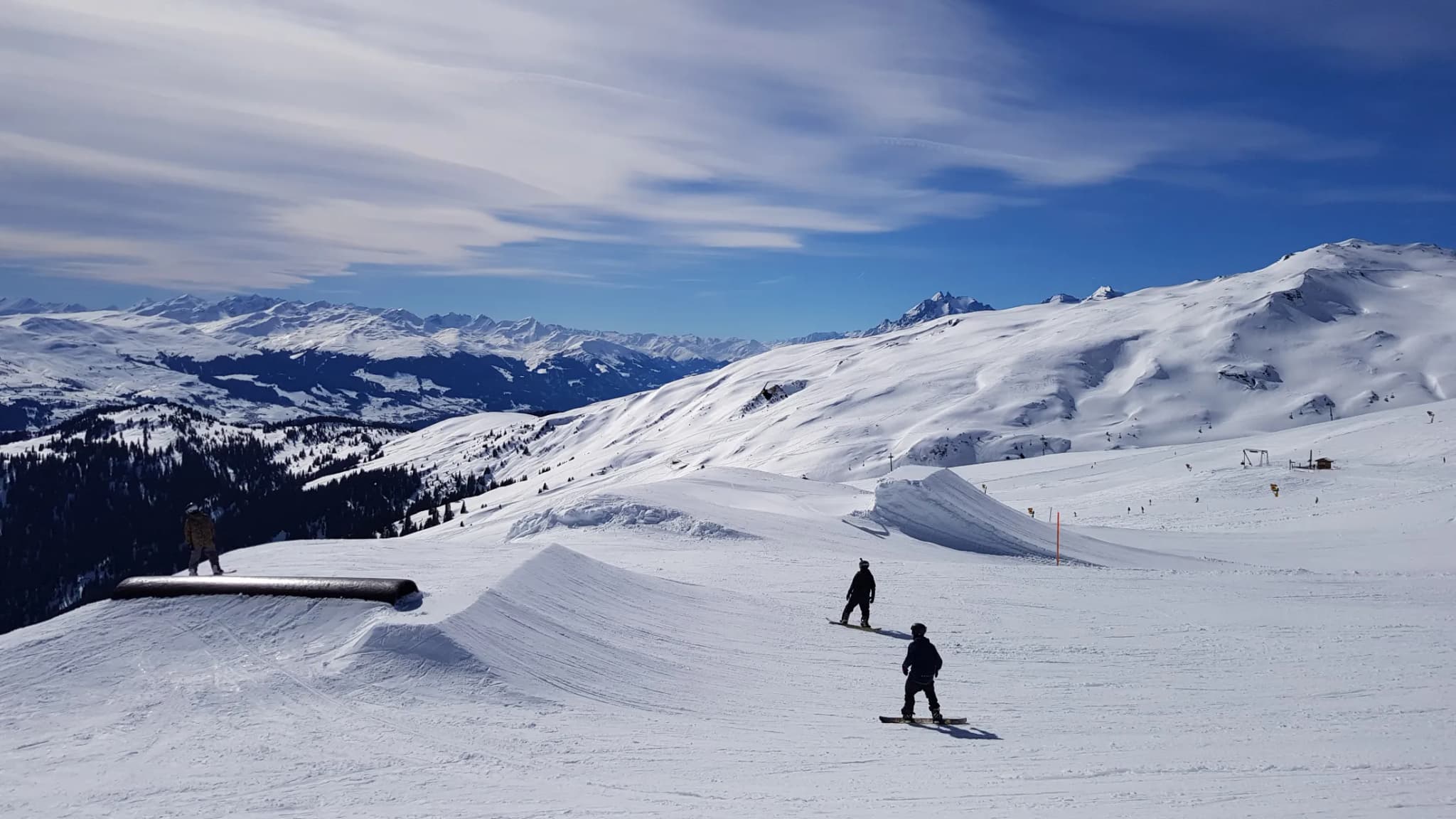
In March, temperatures in Hakuba begin to rise.
The days become more comfortable, crowds are usually smaller than in January and February, and accommodation is often easier to book. For families, groups, or travelers who want to avoid the coldest and busiest part of the season, March can be a very comfortable choice.
Snow conditions in March are no longer typical dry powder.
In the morning, the snow surface may be firm or icy. After the sun comes out, it gradually softens into spring snow — the kind of slushy snow that many Taiwanese riders jokingly call “Slurpee snow.”
For powder hunters, March may not be the best choice. But for riders who want to practice turns, carving, park, or simply improve their skills, spring snow can be very suitable.
Because there are fewer people on the slopes, March is also a good time to focus on progression. You can choose one or two main resorts, take your time, adjust your riding, or arrange a lesson.
Accommodation and lesson schedules are also usually more flexible than during peak season. Compared with January and February, March may offer a better chance to book lessons with experienced local riders or instructors.
Paw Pow Zone can introduce partner instructors and help arrange lessons with local Hakuba riders, including interpretation support if needed. If you are interested in taking a lesson with a local rider, feel free to contact us. Availability depends on the date, group size, level, instructor schedule, and snow conditions.
March is not Hakuba’s deepest powder month, but it is one of the best times to improve at your own pace.
April|Late Season, Spring Skiing, and Maybe Cherry Blossoms
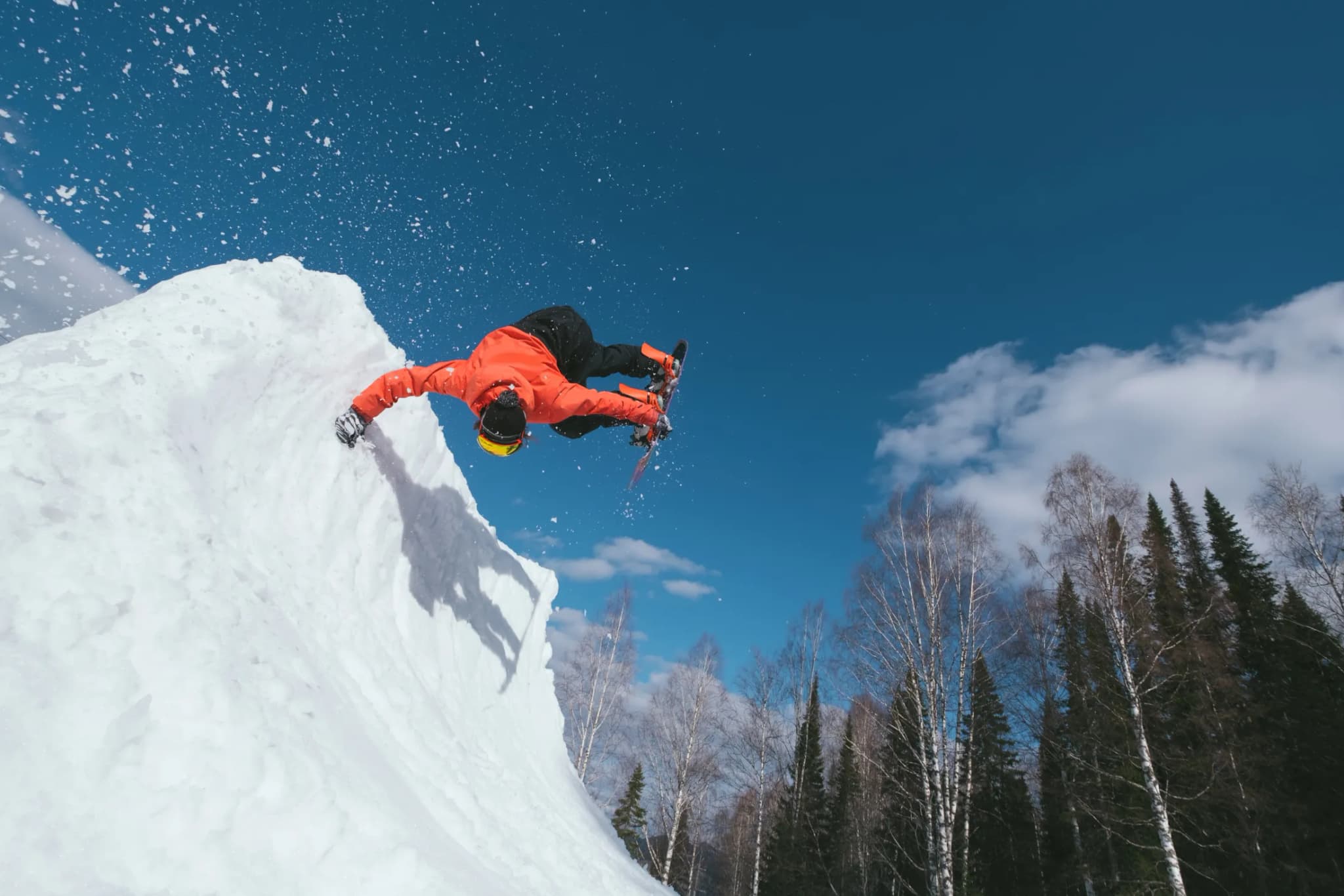
April in Hakuba is the end of the spring skiing season.
Not all resorts and courses remain open through April, so it is important to check resort operations before planning your trip.
For example, in the 2025–26 season, closing dates across Hakuba varied from mid-March to early May. Happo-one ended ski operations on April 19 due to snowmelt. Able Hakuba Goryu ended on May 3, while Tsugaike finished its 2025–26 season on May 6.
The good points of April are fewer crowds, more comfortable temperatures, and a slower travel pace. Restaurants are also less crowded, and you can enjoy spring terrain that feels different from deep winter.
The downside is that snow conditions are less stable, open terrain is limited, and April is not suitable for people expecting powder. Some restaurants and shops in the village may also close temporarily or change their hours during the seasonal transition.
However, April has one charm that winter does not: cherry blossoms.
Because Hakuba is at a higher elevation, cherry blossoms usually bloom later than in cities like Tokyo and Kyoto. In the Hakuba area, cherry blossoms often come into season between mid-April and early May. The timing changes depending on the year’s temperatures, so full bloom in mid-April is never guaranteed. But if the timing works out, you may be able to enjoy spring snow and cherry blossoms in the same trip.
If you would like to include cherry blossoms in your trip, you can refer to Antenna Hakuba’s guide to Hakuba cherry blossom spots and bloom timing.
If you want to finish the season in a relaxed way, April still has its appeal. But if this is your first Hakuba trip and you are expecting classic powder snow, January to February, or early March, will be closer to the Hakuba you are imagining.
Recommended Snow Condition Tools Before Your Trip
Hakuba’s snow conditions change every year. Even within the same month, conditions can vary depending on temperature, snowfall, elevation, and short-term weather.
Before deciding when to go, it is a good idea to check real-time snow conditions and weather forecasts in addition to monthly trends.
PowderSearch.JP
PowderSearch.JP lets you check temperature, precipitation, wind direction and speed, sunshine, snow depth, and snowfall data across Japan. It is useful for watching recent weather and snow changes.
It also offers powder rankings, map search, and search by observation point, mountain name, or ski resort name.
When using it, search for Hakuba or your target ski area, then check the latest data for that location.
Snow-Forecast
Snow-Forecast is useful for checking ski resort weather and snowfall forecasts.
It provides snow forecasts, weather maps, and snow reports, with forecasts by elevation. It is useful for checking short-term snow conditions before departure.
However, all snow tools should be used as references only. Before skiing, always check each resort’s official website, lift operations, road conditions, and the day’s weather.
Choose the Right Month, Not Just the Busiest Plan
There is no single best time to ski in Hakuba.
If you want powder, January and February are the months to look forward to most.
If you want to avoid peak season and reduce accommodation costs, March is a very good choice.
If you want to finish the season in a more relaxed way, April has its own spring skiing charm.
When choosing your travel month, do not look only at snowfall. Think about the rhythm you want for your trip.
Hakuba’s snow is different every year, and we still have a lot of fun every year.
But if you look at the monthly characteristics, current snow conditions, and your own travel style together, you will be able to find the Hakuba snow season that fits you best.
-
Copyright Notice
All text, images, and layout in this article are original content created by Paw Pow Zone. Unauthorized reproduction, copying, rewriting, translation, commercial use, or use of this content on other websites, social media platforms, blogs, or travel media is not permitted. For article references, media inquiries, brand collaborations, accommodation features, or content partnerships, please contact Paw Pow Zone. We are happy to collaborate with creators, brands, and travel platforms that share a similar sensibility.
© Paw Pow Zone®. All rights reserved.